

Hey there! As a supplier of indirect extrusion lines, I often get asked this question: "How long does it take to train an operator for an indirect extrusion line?" Well, it's not a one - size - fits - all answer, and in this blog, I'm gonna break it down for you.
Understanding the Indirect Extrusion Line Basics
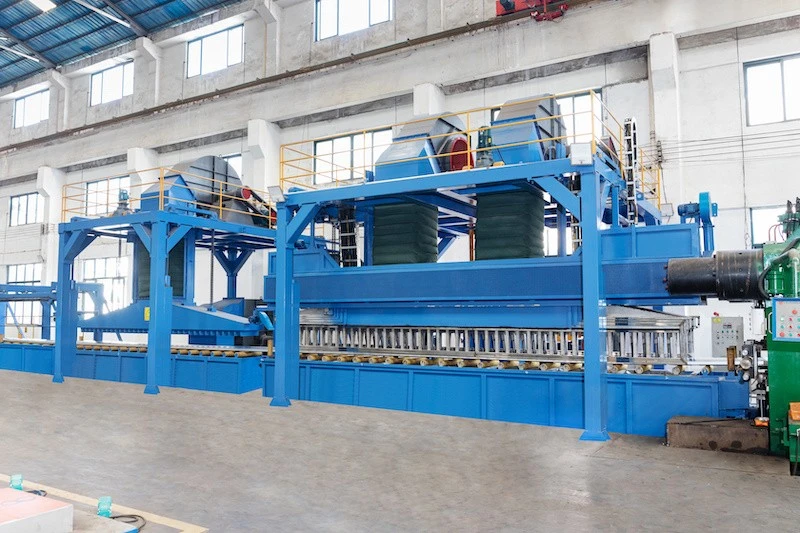
First off, let's quickly go over what an indirect extrusion line is. It's a complex setup used mainly for shaping materials, especially metals like aluminum. The main components include the Indirect Extrusion Press, which is the heart of the operation. This press applies pressure to force the material through a die, giving it the desired shape. Then, there's the Aluminum Extrusion Handling Table, which helps in moving the extruded products around safely and efficiently. And don't forget the Aluminum Profiles Online Quenching Tank, which is crucial for cooling the extruded profiles to set their properties.
Factors Affecting Training Time
Operator's Background
If the operator has prior experience in metalworking or extrusion processes, they'll have a head start. Someone who's already familiar with machinery, pressure systems, and basic metallurgy concepts will pick up the indirect extrusion line operation much faster. For example, an operator who has worked on a direct extrusion line before will understand some of the fundamental principles, like die design and material flow. In this case, the training time could be significantly reduced, maybe taking around 2 - 3 weeks.
On the other hand, a complete newbie with no relevant experience will need more time. They'll have to learn everything from scratch, including the basic safety protocols, how the different components of the line work, and the technical aspects of the extrusion process. For such an operator, the training could stretch to 6 - 8 weeks or even longer.
Complexity of the Line
The complexity of the indirect extrusion line itself plays a huge role. Some lines are relatively simple, with basic controls and fewer components. These are easier to learn and operate, and an operator can be trained in as little as 3 - 4 weeks.
However, if the line is highly automated, with advanced control systems, sensors, and integrated quality control features, the training time will increase. The operator needs to understand how to program the automation, interpret sensor data, and troubleshoot any issues that may arise. In this scenario, training could take 8 - 10 weeks or more.
Training Program Quality
A well - structured training program can make a world of difference. If the training includes hands - on experience, theoretical knowledge, and real - world case studies, the operator will learn more effectively. Our company offers a comprehensive training program that starts with classroom sessions to teach the basics of extrusion theory, safety, and line components. Then, the operators get to work on the actual line under the supervision of experienced technicians. This combination of theory and practice helps speed up the learning process.
In contrast, a poor training program that lacks practical elements or is not well - organized can lead to longer training times and less - competent operators.
Phases of Training
Theoretical Training
The first phase is all about the theory. This usually takes about 1 - 2 weeks, depending on the operator's background. During this time, the operator learns about the extrusion process, the properties of the materials being extruded, and the safety procedures. They study the different components of the indirect extrusion line, how they interact with each other, and the role of each part in the overall process.
Hands - on Training
Once the theoretical foundation is laid, it's time for hands - on training. This is the most crucial part, and it can last anywhere from 2 - 6 weeks. The operator starts by observing experienced technicians as they operate the line. Then, they gradually take over simple tasks, like loading the billets into the press or adjusting the handling table. As they gain more confidence and skill, they move on to more complex operations, such as setting up the die and controlling the extrusion speed.
Quality Control and Troubleshooting Training
In the final phase, which can take 1 - 2 weeks, the operator learns about quality control. They are taught how to inspect the extruded products for defects, measure the dimensions, and ensure that the products meet the required standards. They also learn how to troubleshoot common problems that may occur during the extrusion process, such as blockages in the die or issues with the cooling system.
Continuous Learning
Even after the initial training is complete, the learning doesn't stop. The field of extrusion is constantly evolving, with new technologies and materials being introduced all the time. Operators need to keep up with these changes to ensure optimal line performance.
Our company offers ongoing support and refresher courses to help operators stay updated. This continuous learning helps improve the operator's skills over time and ensures that they can handle any challenges that come their way.

Conclusion
So, to answer the question, "How long does it take to train an operator for an indirect extrusion line?" It can range from 3 weeks for an experienced operator on a simple line to 10 weeks or more for a novice on a complex, automated line. The key is to have a well - structured training program, hands - on experience, and a commitment to continuous learning.
If you're in the market for an indirect extrusion line and want to know more about our training programs or the products we offer, don't hesitate to reach out. We're here to help you get the most out of your investment and ensure that your operators are well - trained and competent.
References
- "Extrusion Technology Handbook" by John A. Schey
- "Metal Extrusion: Theory and Practice" by Emile Akkerman