

Hey there! As a supplier of Horizontal Anodizing Lines, I've been getting a lot of questions lately about the role of current density in the anodizing process. So, I thought I'd write a blog post to break it down for you.
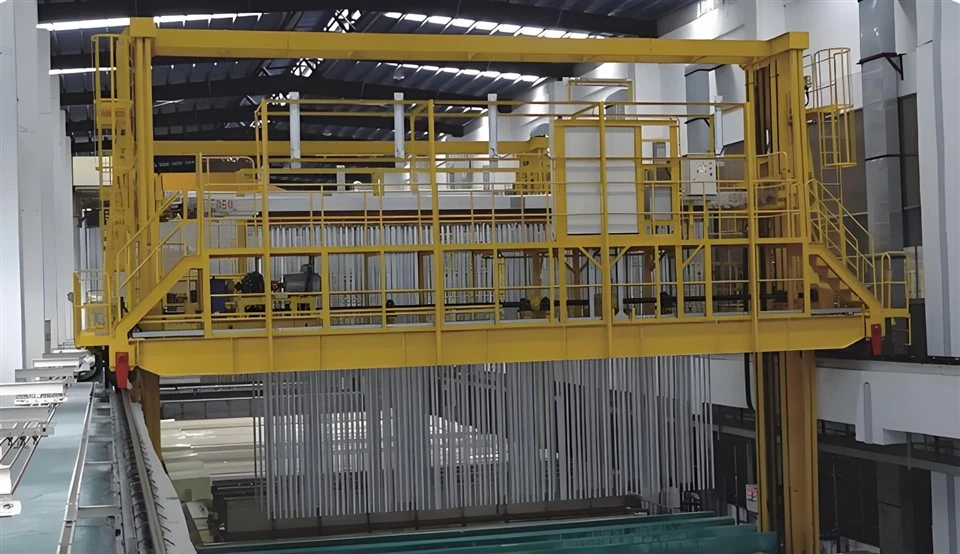
First off, let's talk about what anodizing is. Anodizing is an electrochemical process that creates a protective oxide layer on the surface of metals, usually aluminum. This oxide layer not only enhances the metal's corrosion resistance but also improves its appearance and durability. A Horizontal Anodizing Line is a specialized setup that allows for the anodizing of aluminum profiles in a horizontal orientation. This setup is great for large - scale production as it can handle long and large profiles more efficiently.
Now, let's get to the main topic: current density. Current density is defined as the amount of electric current flowing per unit area of the electrode surface. In the anodizing process, it plays a crucial role in determining the quality and properties of the anodized layer.
How Current Density Affects the Anodized Layer Thickness
One of the most direct impacts of current density is on the thickness of the anodized layer. Generally speaking, a higher current density leads to a faster growth rate of the anodized layer. When you increase the current density, more electrons are flowing through the electrolyte and reaching the aluminum surface. This causes more aluminum atoms to react with oxygen in the electrolyte to form aluminum oxide, which builds up the anodized layer.
However, there's a catch. If the current density is too high, the anodized layer may grow too quickly. This can result in a porous and uneven layer. The pores in the layer may be too large, which can compromise the layer's protective properties. On the other hand, if the current density is too low, the growth rate of the anodized layer will be slow. You'll end up spending more time in the anodizing process to achieve the desired layer thickness, which is not very efficient for large - scale production.
Impact on the Hardness and Density of the Anodized Layer
Current density also affects the hardness and density of the anodized layer. A moderate current density usually produces a denser and harder anodized layer. At a proper current density, the aluminum oxide crystals in the layer are formed in a more orderly manner. This results in a compact structure that offers better protection against wear and tear.
When the current density is extremely high, the rapid formation of the anodized layer can lead to a less dense structure. The layer may have more defects and voids, which makes it less hard and more prone to damage. In contrast, a very low current density may not provide enough energy to form a well - structured layer. The anodized layer may be soft and have a lower density.

Influence on the Appearance of the Anodized Surface
The appearance of the anodized surface is another aspect affected by current density. A uniform current density across the aluminum profile is essential for a consistent appearance. If the current density varies across the surface, you may notice differences in color and finish.
For example, areas with a higher current density may appear darker or have a different shade compared to areas with a lower current density. This can be a big problem, especially when you're aiming for a high - quality, aesthetically pleasing finish.
To achieve a uniform appearance, it's important to ensure that the electrical connections in your Horizontal Anodizing Line are properly set up. You can also use techniques like agitation of the electrolyte to distribute the current more evenly across the aluminum surface.
Current Density and Energy Consumption
Energy consumption is a significant concern in any industrial process, and the anodizing process is no exception. Current density is directly related to energy consumption. A higher current density means more electrical energy is being used. While this may lead to a faster anodizing process, it also increases the cost of production.
As a supplier of Horizontal Anodizing Lines, we always recommend finding the optimal current density for your specific application. This way, you can balance the speed of the anodizing process with energy efficiency. You don't want to waste energy by using an unnecessarily high current density, but at the same time, you don't want to slow down the production process with a very low current density.
Tips for Controlling Current Density in a Horizontal Anodizing Line
Now that we understand the importance of current density, let's talk about how to control it in a Horizontal Anodizing Line.
First, you need to have a good understanding of your anodizing bath. The composition of the electrolyte, its temperature, and the type of aluminum alloy you're anodizing all play a role in determining the optimal current density. For example, different aluminum alloys may require different current densities to achieve the best results.
Second, invest in a high - quality power supply. A stable power supply can accurately control the current density. It should be able to maintain a consistent current output even when there are fluctuations in the electrical load.
Finally, regularly monitor and adjust the current density during the anodizing process. You can use sensors to measure the current density at different points in the anodizing bath. If you notice any variations, you can make adjustments to ensure a uniform anodized layer.
Related Equipment and Their Connection to Current Density
In a Horizontal Anodizing Line, there are other pieces of equipment that are related to current density. For example, the Extrusion Dies Sand Blasting Machine is used to prepare the aluminum surface before anodizing. A well - prepared surface can help the current distribute more evenly during the anodizing process, which in turn affects the current density.
Also, if you're considering different types of anodizing lines, you might want to look at the Vertical Anodizing Line. While the basic principles of current density apply to both horizontal and vertical lines, the setup and design of the vertical line may require different current density settings due to differences in electrolyte flow and profile orientation. Of course, our Horizontal Anodizing Line is designed to provide optimal control over current density for efficient and high - quality anodizing.
Conclusion
In conclusion, current density is a key factor in the anodizing process of a Horizontal Anodizing Line. It affects the thickness, hardness, density, appearance of the anodized layer, as well as energy consumption. By carefully controlling the current density, you can achieve a high - quality anodized product while maintaining production efficiency.
If you're in the market for a Horizontal Anodizing Line or have any questions about current density in the anodizing process, feel free to reach out. We're here to help you optimize your anodizing process and get the best results.
References
- "Anodizing of Aluminum" by ASM International
- "Electrochemical Surface Engineering" by various authors in the field of electrochemistry