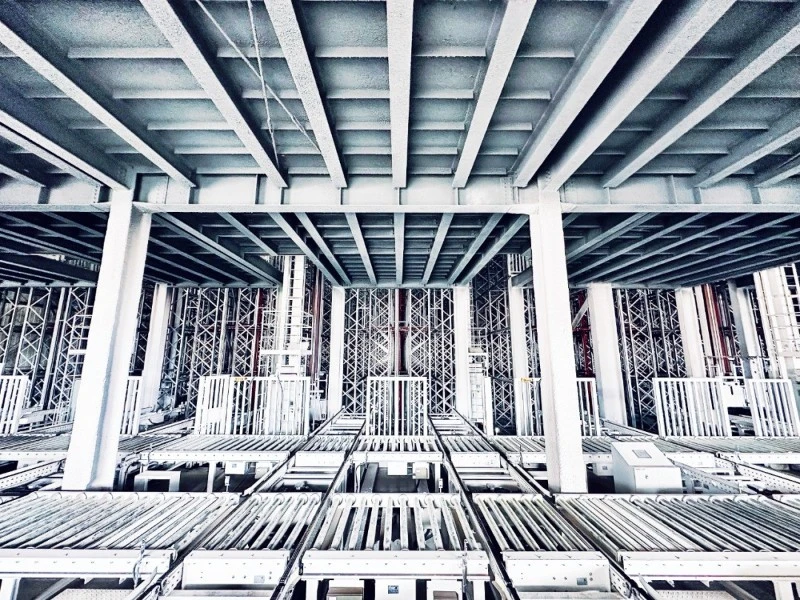
Delivering High-Density Industrial Warehousing Under a Tight Project Schedule
As China's new materials industry continues to expand, manufacturers are investing in modern warehousing infrastructure to support production growth, improve storage capacity, and strengthen operational efficiency. For companies operating large-scale manufacturing facilities, warehouse construction is not simply about adding storage space. It requires careful coordination of structural design, storage density, installation efficiency, and compatibility with automated warehouse equipment.
In this project, the end customer is a leading Chinese new materials manufacturer that began its business with nylon rope and has since expanded into chemical fibers, chemicals, and advanced materials, growing into a modern multinational enterprise with a global presence.
The customer faced two major challenges: a demanding construction schedule and a high-capacity storage requirement. The total project timeline, including building construction, was limited to just 13 months. To address these requirements, SSI SCHÄFER developed a customized C-SIGMA racking system solution, designed to maximize warehouse capacity while supporting rapid installation and reliable operation.
The project demonstrates how high-density pallet racking, precision manufacturing, and innovative installation methods can help large manufacturing enterprises accelerate warehouse development and prepare for future production expansion.
Project Overview: Eight-Aisle Double-Deep Pallet Racking System
The project features an eight-aisle double-deep pallet racking system designed for high-capacity storage and efficient warehouse space utilization.
Key project specifications
Racking height: 20.8 m
Racking length: 84.2 m
Racking width: 54.75 m
Total pallet locations: 21,320
Pallet dimensions: 1,160 × 1,160 × 1,300/1,600 mm
Load capacity per pallet: 800 kg
Seismic design requirement: Intensity 7 / 0.1g
The C-SIGMA solution was developed to accommodate the customer's warehouse dimensions, pallet specifications, load requirements, and demanding project schedule. Through optimized rack configuration and high-precision manufacturing, the system helps maximize vertical storage potential while providing a reliable foundation for warehouse operations.
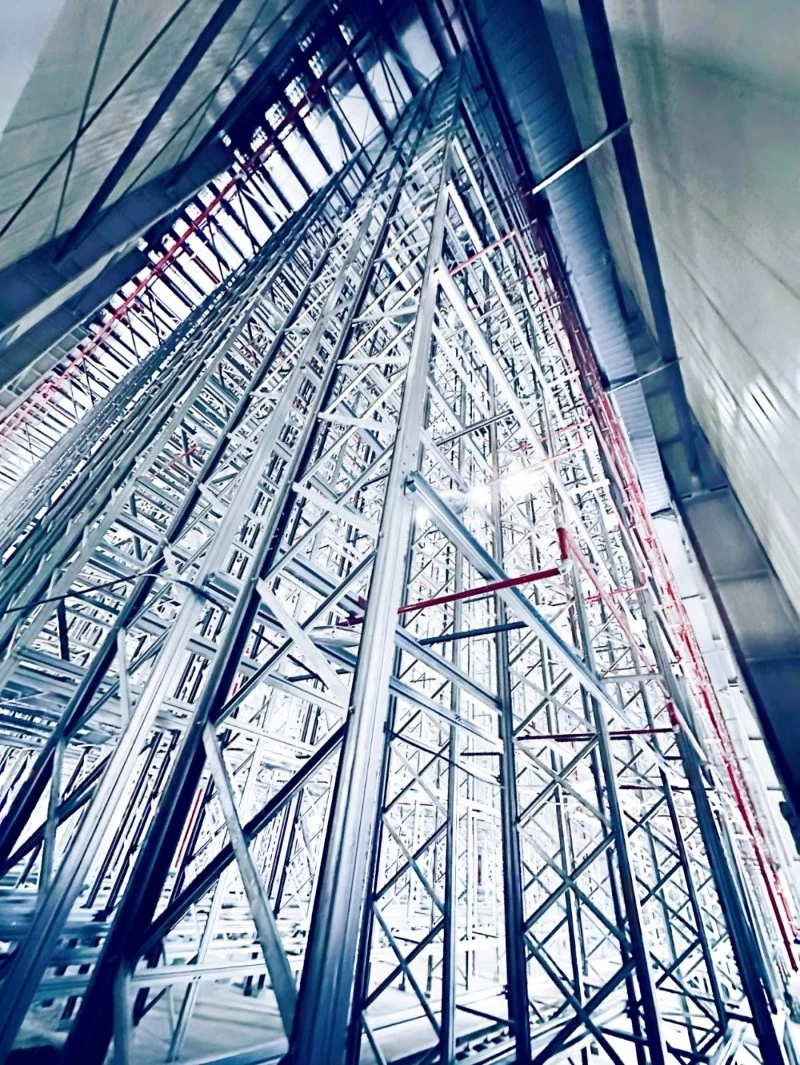
(Industrial Warehouse Racking System)
Four Key Advantages of the C-SIGMA Racking Solution
1. Advanced Manufacturing Processes for Faster Delivery
One of the main challenges in this project was completing the warehouse within a compressed overall construction schedule. Shortening the racking production cycle was therefore essential to keeping the project on track.
The C-SIGMA racking system uses cold roll-forming technology to manufacture its upright frames and beams. This integrated forming process supports efficient production and consistent component profiles.
The system also incorporates an original zinc-magnesium-aluminum surface treatment, eliminating the need for additional conventional coating processes in the described production configuration. By reducing intermediate processing steps, the manufacturing workflow can be streamlined, helping shorten lead times and support faster project delivery.
These manufacturing advantages are particularly valuable for large-scale warehouse projects where the timing of equipment production, transportation, and installation must align closely with building construction.
2. Innovative Installation Methods to Improve Efficiency and Safety
Traditional high-bay racking installation often involves extensive assembly work at elevated heights, increasing installation complexity and the amount of work performed in potentially hazardous conditions.
For this project, the installation method was optimized through ground-level preassembly followed by integrated lifting and positioning. Major rack sections were assembled on the ground before being lifted into their designated positions.
This approach reduces the amount of fragmented assembly work at height, helps improve installation efficiency, and supports better control over site safety and construction progress.
From the arrival of the first batch of materials to the completion of the full racking installation, the project took only three months.
This rapid implementation helped the customer maintain its overall construction schedule and demonstrated the value of coordinating manufacturing, installation planning, and on-site execution from the early stages of a warehouse project.
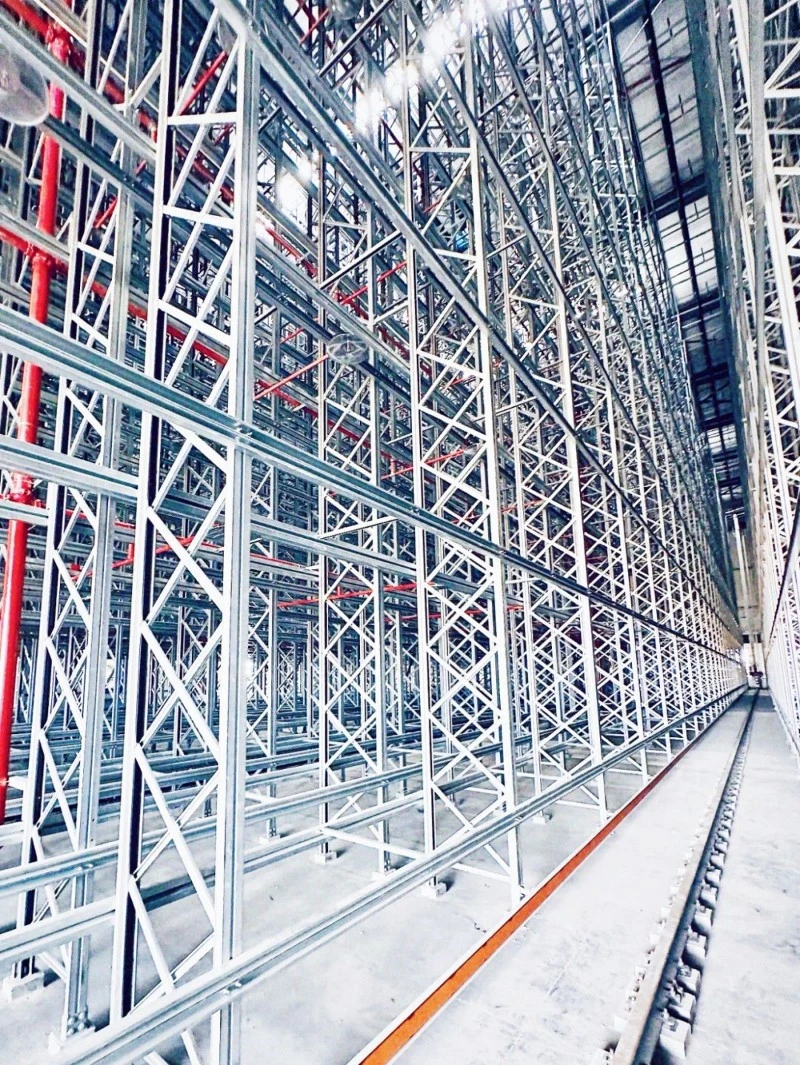
(High-Bay Automated Storage System)
3. High-Density Storage to Exceed Capacity Targets
Maximizing storage capacity was another central requirement. With a warehouse height of 20.8 meters, making effective use of the available vertical space was essential.
The C-SIGMA system features selectively positioned upright holes, allowing shelf levels to be adjusted according to pallet dimensions, stored goods, and warehouse height. This flexibility supports more precise storage layout planning and better utilization of the available building volume.
Through detailed layout optimization, the planned storage capacity increased from the original 20,000 pallet locations to 21,320 pallet locations, adding 1,320 locations beyond the initial design target.
This increase represents approximately 6.6% more storage locations than originally planned, enabling the customer to accommodate additional inventory within the same warehouse footprint.
For manufacturing enterprises experiencing production growth, higher storage density can help improve warehouse capacity utilization and reduce the pressure to expand storage facilities prematurely.
4. High-Precision Components for Reliable Automated Warehouse Operations
Precision is critical in high-bay racking systems, particularly when they are designed to work with automated storage and retrieval equipment. Component deviations can affect alignment, equipment movement, and the stability of long-term operations.
The C-SIGMA racking components in this project were manufactured using an original German DREISTERN roll-forming production line, with customized precision punching to meet project requirements. The reported overall product tolerance was within 0.5 mm.
This high level of manufacturing precision supports accurate component positioning and helps create suitable operating conditions for automated warehouse equipment.
For facilities using automated storage and retrieval systems, stacker cranes, or other high-bay handling equipment, precise rack geometry is an important factor in reliable equipment positioning and consistent warehouse performance.
By combining precision-manufactured components with project-specific engineering, the racking system provides a solid structural foundation for efficient and dependable warehouse operations.
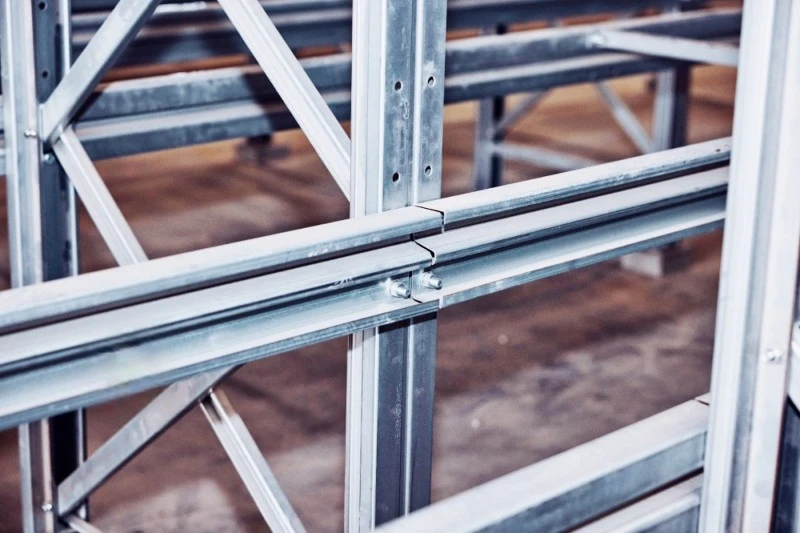
(Zinc-Magnesium-Aluminum Coating)
Supporting Manufacturing Growth Through Intelligent Warehousing
For large manufacturing enterprises in the chemical fiber, chemical, and advanced materials sectors, warehouse capacity directly affects inventory organization, production support, and the ability to respond to changing business requirements.
A well-designed pallet racking system can improve storage density, establish clearer inventory locations, and provide the structural infrastructure required for more advanced warehouse operations. When combined with appropriate warehouse management software, material handling equipment, and automated storage technologies, it can also support more coordinated inventory control and internal logistics.
The C-SIGMA project illustrates how warehouse engineering must balance multiple factors: structural requirements, storage density, component precision, installation safety, construction schedules, and compatibility with automation equipment.
Rather than treating these factors separately, an integrated project approach helps ensure that the storage system meets both immediate capacity requirements and longer-term operational objectives.
Project Results and Customer Recognition
Despite the demanding overall construction schedule of 13 months, the C-SIGMA racking solution was implemented with the full installation completed within three months of the first material delivery.
The optimized design increased planned storage capacity from 20,000 to 21,320 pallet locations, while the precision-manufactured racking components provided a foundation for reliable operation with automated warehouse equipment.
The project received positive recognition from the customer for its delivery performance, product quality, space optimization, and professional project execution.
This case highlights the importance of combining engineering design, manufacturing efficiency, installation innovation, and precision production to address the complex requirements of modern industrial warehousing.
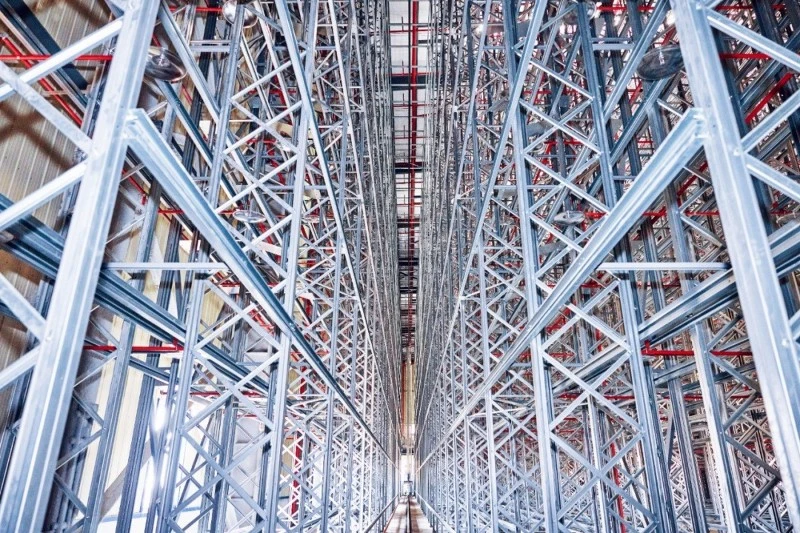
(Warehouse Automation Engineering)
Conclusion: Building High-Performance Industrial Warehouse Infrastructure
As manufacturing enterprises continue to expand their production capacity and global operations, warehouse systems must provide more than basic storage. They need to maximize available space, support efficient material flow, meet demanding delivery schedules, and accommodate future automation requirements.
The C-SIGMA double-deep pallet racking project demonstrates how a customized high-density storage solution can help address these challenges through advanced roll-forming technology, optimized installation methods, flexible rack configuration, and high manufacturing precision.
China JSSL Company focuses on industrial logistics automation planning, intelligent warehousing, and logistics system integration. By considering warehouse layout, material flow, storage equipment, and system coordination, China JSSL Company supports manufacturers seeking to develop more efficient and scalable logistics infrastructure.
For businesses planning new warehouses, expanding storage capacity, or upgrading existing logistics facilities, careful engineering and the right combination of storage and automation technologies are essential to achieving long-term operational value.