

1. Global Warehouse Automation: From Equipment Supply to Integrated Solutions
As competition intensifies in the logistics equipment industry, international markets are becoming a strategic growth direction for warehouse automation manufacturers and system integrators. Overseas customers increasingly seek more than individual machines. They expect complete solutions that combine equipment, software, engineering, commissioning, and long-term operational support.
At the same time, international warehouse projects often involve more demanding requirements for system reliability, software security, regulatory compliance, and lifecycle cost management. Suppliers must therefore develop comprehensive capabilities across solution design, equipment manufacturing, software integration, project execution, and after-sales service.
China JSSL Company focuses on intelligent logistics and warehouse automation solutions, helping customers evaluate storage requirements, coordinate automation technologies, and plan integrated systems around their facility layouts and operational objectives. A systematic approach to project development can help businesses establish more efficient, flexible, and scalable warehouse operations.
2. Integrated Automation: Combining Hardware and Software
An intelligent warehouse depends on the coordinated operation of storage equipment, material handling systems, control software, and warehouse management applications. Integrating these components into a unified architecture can improve workflow visibility, equipment coordination, and operational flexibility.
Core technologies commonly used in intelligent warehouse projects include:
Automated Storage and Retrieval Systems (AS/RS): Stacker cranes and high-bay storage systems for palletized goods, cartons, and industrial materials.
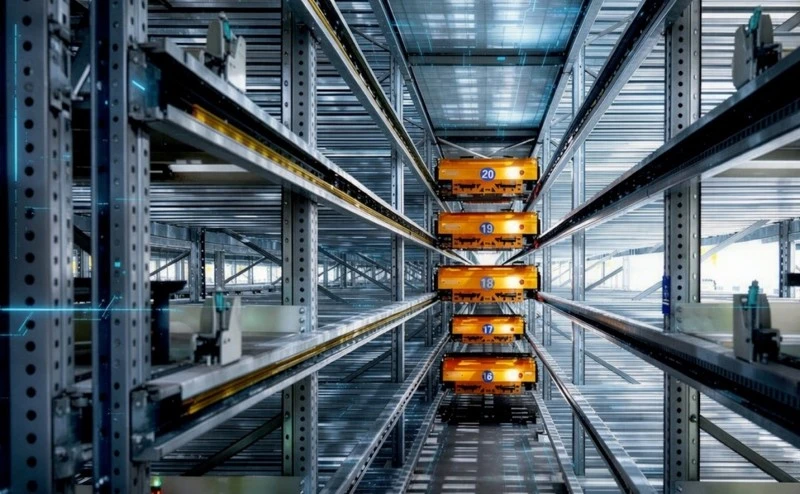
Multi-Level Shuttle Systems: Automated tote storage solutions designed to increase storage density and support high-frequency order fulfillment.
Conveyor Systems: Automated transportation connecting receiving, storage, picking, sorting, and dispatch areas.
Goods-to-Person (GTP) Picking Stations: Systems that bring inventory to operators, reducing unnecessary walking and supporting more efficient picking workflows.
Warehouse Execution Systems (WES): Software that coordinates task priorities, equipment availability, and real-time operational decisions.
Warehouse Management Systems (WMS): Software for inventory visibility, warehouse processes, order management, and fulfillment.
Warehouse Control Systems (WCS): Software that coordinates automated equipment, transportation routes, and material flow.
Digital Twin Technology: Virtual models that support process simulation, capacity analysis, and evaluation of alternative operating strategies.
These technologies perform different functions but must work together. WMS manages warehouse operations and inventory, WES coordinates execution priorities, and WCS translates control decisions into equipment actions. A digital twin can provide an additional environment for testing system behavior before changes are introduced into live operations.
China JSSL Company can help customers evaluate these technologies and coordinate equipment, software interfaces, and operational workflows as part of an integrated warehouse automation plan.
3. Multi-Level Shuttle Warehousing for High-Density Storage
Multi-level shuttle systems are particularly relevant to warehouses with limited floor space, high inventory variety, and frequent order movements. By using shuttle vehicles to access storage locations across multiple levels, these systems can support dense storage and automated tote handling.
Compared with conventional storage configurations, shuttle-based systems may offer greater flexibility in equipment allocation and operational expansion. Their suitability, however, depends on the building layout, tote dimensions, order profiles, required throughput, and overall system design.
A typical multi-level shuttle warehouse may include:
Automated tote storage and retrieval equipment.
Multi-level shuttle vehicles and rack structures.
Conveyor networks and buffering zones.
Goods-to-person picking stations.
Empty tote return and order consolidation areas.
Centralized software scheduling and equipment control.
Monitoring, maintenance, and safety systems.
System capacity should be evaluated as a whole rather than by considering individual machines in isolation. Shuttle availability, conveyor throughput, buffer capacity, picking station productivity, software scheduling, and order distribution all influence actual warehouse performance.
A properly engineered solution can help businesses improve space utilization, coordinate inventory movements, and adapt to changing order volumes. Modular system design may also allow capacity to be expanded as operational requirements grow.

(Automated Storage and Retrieval System)
4. Reference Project: Multi-Level Shuttle Automation in Malaysia
The original industry article describes a multi-level shuttle tote-storage project delivered for a customer in Kuala Lumpur, Malaysia. The project provides an industry reference for how automated storage, conveyor transportation, goods-to-person picking, and warehouse execution software can be combined into a coordinated system.
The following figures are reported in the original source and relate to that separate project. They are not China JSSL Company project results or performance guarantees.
| Project element | Reported configuration |
|---|---|
| Storage capacity | More than 12,000 tote storage locations |
| Shuttle equipment | 30 multi-level shuttle vehicles |
| Main conveyor line | Maximum reported flow of 1,000 totes per hour |
| Goods-to-person picking | Two systems with a reported automated picking capacity of up to 700 order lines per hour |
| System coordination | Centralized scheduling through a self-developed WES |
| Project delivery | Turnkey scope covering equipment, software, system configuration, and operational support |
The reported design incorporated receiving and dispatch buffers, tote induction, multi-level shuttle storage, sequencing buffers, goods-to-person picking stations, empty tote handling, and order consolidation areas.
A centralized WES coordinated warehouse tasks and responded to changing order priorities. According to the source, the system could prioritize urgent orders, resume tasks following shuttle fault recovery, and support routine inventory checks and exception handling.
The project also incorporated interconnected communications and operational visibility, allowing warehouse managers to monitor material movements and system status.
This example illustrates an important principle in warehouse automation: storage capacity, picking productivity, transportation flow, and software scheduling must be designed together. The final performance of a system depends on the interaction of these elements, as well as on the customer's actual order mix and operating conditions.
5. Software Integration and Digital Intelligence
Software capabilities are increasingly important in international warehouse automation projects. Customers need systems that can coordinate equipment reliably, integrate with existing business applications, and accommodate different operational processes.
WES: Coordinating operational priorities
WES can assign tasks according to order urgency, equipment availability, buffer occupancy, and transportation constraints. Effective scheduling helps coordinate storage, retrieval, and picking activities while reducing unnecessary equipment movements.
WMS: Managing inventory and fulfillment
WMS provides inventory visibility and manages warehouse processes, order allocation, and fulfillment. International deployments may require configurable workflows, multilingual interfaces, and adaptation to local business practices and regulatory requirements.
WCS: Controlling automated equipment
WCS connects software decisions with equipment operations. Depending on the system architecture, it may coordinate routing, conveyor control, traffic management, buffer allocation, and responses to equipment exceptions.
Digital twins: Simulating and evaluating system performance
Digital twin technology can support virtual testing of warehouse layouts, equipment configurations, peak workloads, and expansion scenarios. Simulation can help project teams identify potential bottlenecks and assess alternatives before implementing changes in the physical warehouse.
Together, these technologies provide a foundation for more coordinated warehouse operations. However, software integration must be designed around the actual equipment interfaces, communication protocols, cybersecurity requirements, and existing IT infrastructure.
China JSSL Company can assist with evaluating system interfaces and coordinating the integration requirements of warehouse equipment, control software, and enterprise applications. The specific scope of software development and integration should be defined according to each project's technical requirements.
6. Overseas Implementation: Local Adaptation and Lifecycle Support
International project delivery involves more than shipping equipment to another country. Installation planning, commissioning, local regulations, operator training, spare parts, and maintenance arrangements all influence long-term system performance.
Different markets may have distinct requirements for electrical standards, documentation, software security, language support, and operational procedures. These considerations should be addressed during the design stage rather than postponed until installation.
A structured overseas project framework may include:
Requirements analysis: Assess the facility, inventory characteristics, order profiles, throughput targets, and business objectives.
Engineering design: Develop the storage layout, equipment configuration, material flow, safety measures, and software architecture.
System coordination: Confirm interfaces between mechanical equipment, electrical controls, WES, WMS, WCS, and existing enterprise systems.
Installation and commissioning: Coordinate site readiness, equipment installation, functional testing, and acceptance procedures.
Training and documentation: Prepare operating instructions and maintenance documentation and train customer personnel within the agreed scope.
Lifecycle maintenance planning: Define remote support, spare parts requirements, preventive maintenance, fault escalation, and service responsibilities.
Where local technical resources are available, they can support communication, site coordination, and maintenance response. Remote diagnostics and standardized service procedures can also help technical teams identify faults and organize troubleshooting more efficiently.
For China JSSL Company, project-specific planning is essential to defining the appropriate delivery and support model. Local service availability, response commitments, spare parts arrangements, and contractual responsibilities should be confirmed for each target market and project.
(Scalable Warehouse Automation Solutions)
7. From Project Delivery to Long-Term Logistics Partnerships
The development of warehouse automation is shifting competition away from individual equipment specifications toward integrated technical capability and lifecycle value.
For customers, a successful investment should address several priorities:
Operational efficiency: Coordinating storage, transportation, picking, and dispatch activities.
Space utilization: Selecting storage technologies suited to building dimensions and inventory characteristics.
System reliability: Integrating equipment, control software, safety functions, and maintenance planning.
Scalability: Providing a clear pathway for future capacity expansion and process changes.
Lifecycle cost management: Considering energy consumption, maintenance, spare parts, software support, and operational staffing.
Integration flexibility: Connecting warehouse automation with existing enterprise and production systems.
For solution providers, these priorities require a combination of engineering knowledge, equipment coordination, software integration, and structured project management. A long-term partnership also depends on clear communication, realistic performance targets, and transparent service arrangements.
China JSSL Company works with customers to assess warehouse automation opportunities and coordinate solutions suited to their storage requirements, material flows, and business development plans.
Conclusion
Intelligent warehouse automation is evolving toward integrated systems that combine high-density storage, multi-level shuttle technology, automated material handling, software-driven scheduling, and digital simulation. As international customers place greater emphasis on system reliability, adaptability, and lifecycle costs, successful projects require more than equipment supply.
A coordinated approach to solution design, software integration, commissioning, and maintenance planning can help businesses build warehouse operations that are efficient today and adaptable to future demand.
China JSSL Company can support this process through intelligent logistics solution planning and system integration, helping customers evaluate suitable automation technologies and develop scalable warehouse systems aligned with their operational objectives.