

As manufacturing companies accelerate their digital transformation, traditional floor-level warehouses are increasingly unable to meet the demands of modern production.
Limited space utilization, labor-intensive material handling and difficult information tracking can affect production efficiency, inventory management and overall manufacturing performance. For factories handling large volumes of components and frequent material movements, warehouse automation has become an important part of building a more efficient production environment.
China JSSL Company provides integrated smart warehouse and logistics automation solutions that combine automated storage, intelligent material handling and digital warehouse management. By connecting material storage, transportation, scheduling and production requirements, the warehouse can evolve from a traditional storage area into an intelligent material hub supporting the entire manufacturing process.
1. Matching Warehouse Automation with Production Requirements
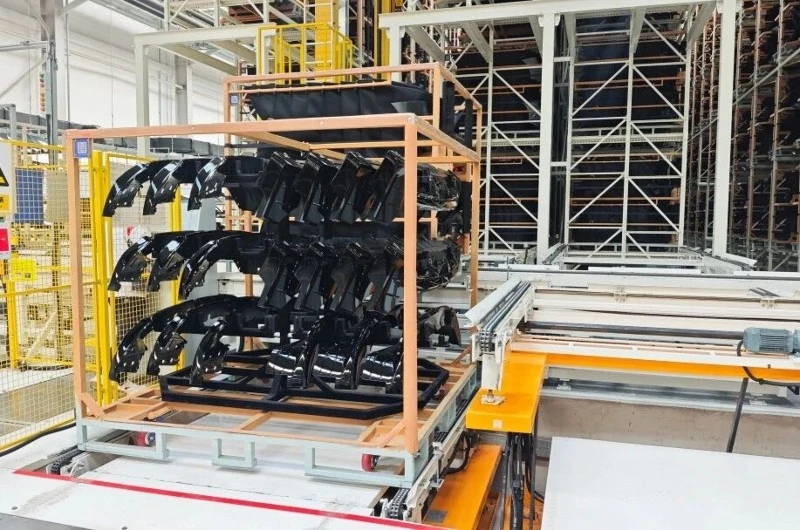
This project focuses on the complete storage and movement of core workshop components, including unfinished parts and painted components.
The system covers several key logistics scenarios:
Automated inbound storage of injection-molded components
Empty and full container circulation
Precise outbound delivery to painting lines
Material delivery to assembly lines
Rapid return of empty handling units
Automated transportation between storage and production areas
The objective is not simply to build a high-density warehouse.
The system is designed around the actual production rhythm of the workshop, combining storage capacity, handling efficiency, operational safety, digital management and future expandability.
For China JSSL Company, this means designing the warehouse as part of the factory's overall material-flow system rather than treating it as an independent storage facility.
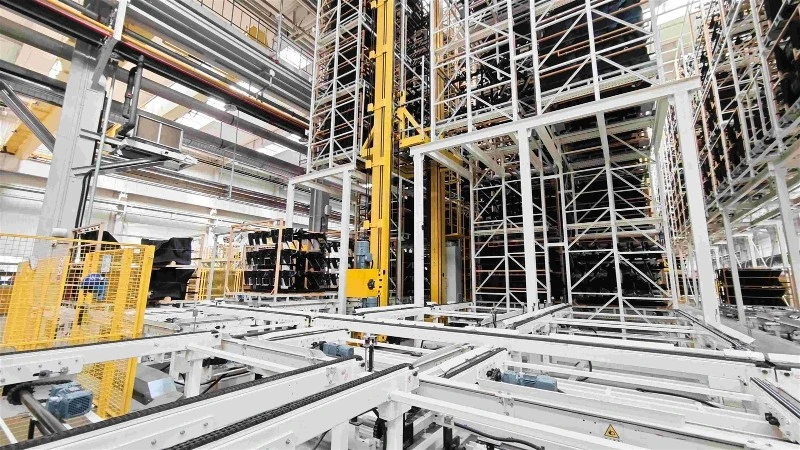
(Manufacturing Logistics Automation)
2. Integrated Smart Warehouse Architecture
The solution is built around three core elements:
Automated Storage + Intelligent Material Handling + Digital Management
Together, these components create an integrated logistics system covering storage, transportation, scheduling and management.
2.1 Cantilever-Supported Automated Storage Racking
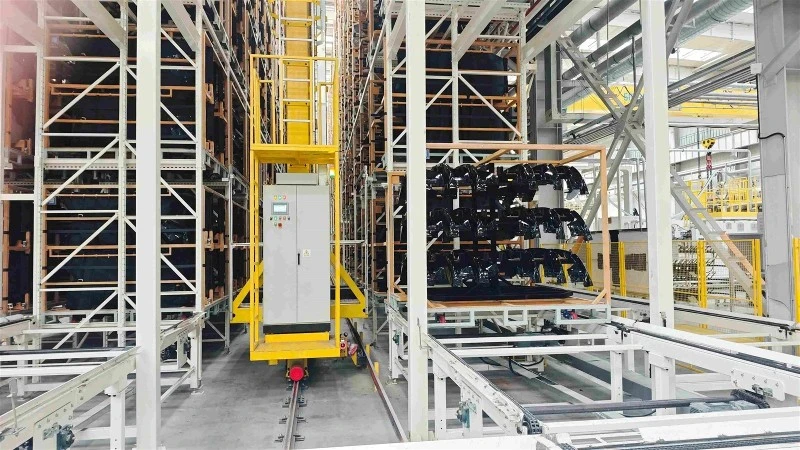
The automated storage system makes extensive use of vertical space, enabling high-density storage of large quantities of tooling carts and material handling units.
Compared with conventional floor-level storage, vertical automated storage can release valuable workshop floor space while creating a more structured storage environment.
The storage configuration is designed according to the dimensions, weight and handling requirements of the materials, allowing different material units to be managed in an organized manner.
2.2 Aisle Stacker Cranes
Stacker crane systems perform high-level storage and retrieval operations within the warehouse.
The equipment provides accurate positioning and stable movement for frequent inbound and outbound operations.
Integrated with the warehouse control system, stacker cranes can execute automatically generated storage and retrieval tasks, reducing the need for manual material searching and handling.
This equipment-and-software combination forms an important part of a modern automated storage and retrieval system (AS/RS).
2.3 Laser-Navigation AGVs
Laser-guided AGVs provide automated transportation between the warehouse and production areas.
Instead of relying entirely on manual forklifts, AGVs can transport materials according to scheduled tasks and defined routes.
This is particularly useful for manufacturing environments where materials need to move repeatedly between storage areas, production lines and other operating zones.
AGV integration also provides greater flexibility for future production-layout adjustments.
2.4 Chain Conveyors and Lift-Transfer Systems
Chain conveyors and lift-transfer equipment connect different operating points within the warehouse.
These systems provide continuous material transfer between storage, handling and production processes.
Through coordinated control, the conveying equipment can work together with stacker cranes and AGVs to create a complete material-flow network.
The result is a transition from isolated equipment operations to coordinated material handling automation.
2.5 Intelligent Monitoring and Inspection
Monitoring and inspection equipment covers the warehouse operating areas and provides real-time information about equipment status and material conditions.
When an abnormal situation occurs, the system can provide timely information for operational response.
Combined with digital warehouse management, monitoring helps improve operational visibility and provides a stronger foundation for preventive management and system maintenance.
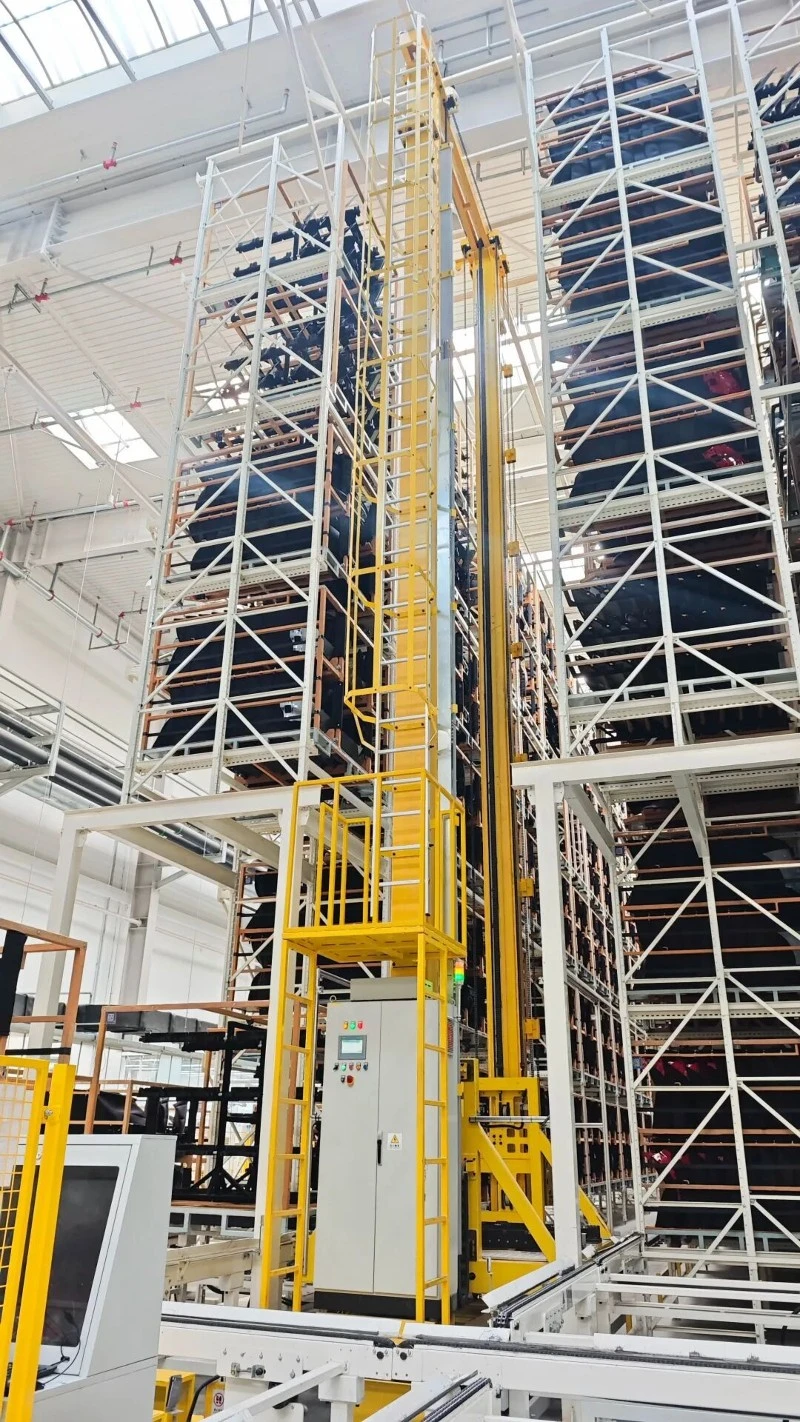
(Automated Warehouse System)
3. From Equipment Automation to Logistics System Integration
The real value of an automated warehouse comes from the coordination between equipment and software.
China JSSL Company integrates the warehouse equipment with digital management systems to create a complete operational workflow.
A typical material process can be organized as:
Material Receiving → Inspection → Identification → Automated Storage → Inventory Management → Production Order → Picking → Transportation → Line-Side Delivery
The Warehouse Management System (WMS) manages inventory information and warehouse tasks, while the Warehouse Control System (WCS) coordinates equipment execution.
Depending on the factory's digital architecture, interfaces can also be reserved for systems such as ERP and MES.
This enables information about materials, inventory, orders and production requirements to move between different systems.
Instead of employees relying on memory to locate materials, the warehouse becomes task-driven and digitally managed.
Instead of repeatedly moving materials with manual forklifts, automated equipment can execute defined transportation tasks.
This combination of WMS, WCS, AGV, stacker cranes and conveyor systems creates a more integrated smart warehouse environment.
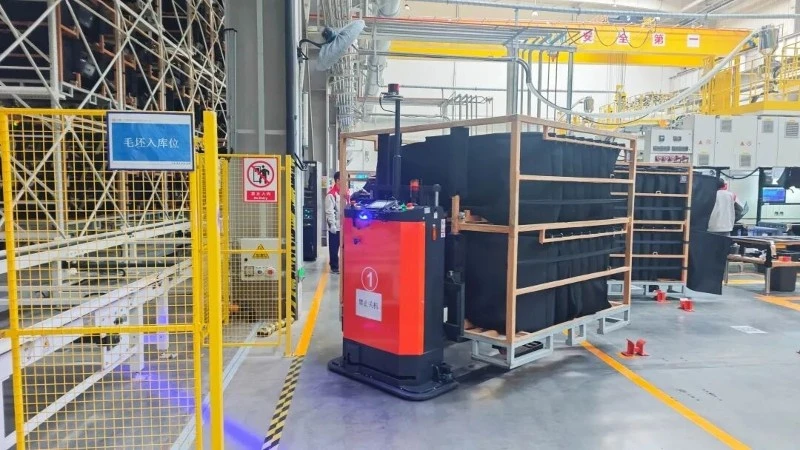
(AGV Material Handling)
4. Supporting Production with Intelligent Material Flow
The project delivers value beyond storage capacity.
By introducing high-density vertical storage, the system releases valuable workshop floor space and creates additional capacity for future production expansion.
Automated material handling reduces manual intervention, while warehouse and production operations can be coordinated according to actual production requirements.
The resulting material-flow structure can be summarized as:
High-Density Storage → Automated Handling → Intelligent Scheduling → Production Delivery
At the information level, digital management provides greater visibility into inventory and warehouse operations.
Users can obtain clearer information about material locations, storage status and operational tasks, while digital records improve traceability across the warehouse process.
This transforms the warehouse from a passive storage area into an active material coordination center.
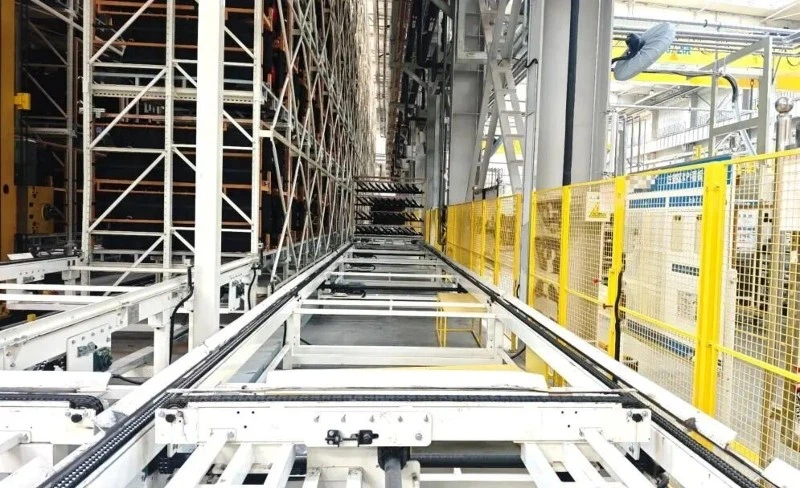
(Stacker Crane System)
5. Flexible Architecture for Long-Term Manufacturing Development
Manufacturing requirements rarely remain unchanged.
Product types, production volumes, workshop layouts and material-flow requirements can evolve as a company expands.
For this reason, the project adopts a modular design and standardized interfaces to provide room for future equipment expansion and functional upgrades.
This is an important consideration when implementing warehouse automation solutions.
A system should not only solve today's storage and handling requirements. It should also provide an adaptable foundation for future manufacturing development.
China JSSL Company's system integration approach considers the relationship between:
Material characteristics
Storage requirements
Production rhythm
Handling routes
Warehouse equipment
Digital management
Factory information systems
This helps ensure that the automation system is aligned with actual manufacturing operations.
(High-Density Storage)
6. China Manufacturing and End-to-End Project Delivery
A complete smart warehouse project involves much more than equipment supply.
China JSSL Company combines China Manufacturing, engineering implementation and logistics system integration to support the complete project lifecycle.
The service scope can cover:
Solution Design → Equipment Manufacturing → System Integration → Installation & Commissioning → Technical Training → After-Sales Support
During the planning stage, the warehouse configuration is developed according to factory conditions and production requirements.
During manufacturing and implementation, equipment and control systems are coordinated to ensure that the physical logistics system and digital management platform work together.
Following commissioning, operators can receive technical and operational training, while long-term maintenance and spare-parts support help maintain system stability.
This full-cycle approach is particularly important for manufacturing customers looking for a single integrated partner rather than disconnected equipment suppliers.
(High-Density Storage)
7. Building a Smarter Manufacturing Logistics Foundation
The transformation from traditional floor-level storage to automated vertical warehousing represents a broader change in manufacturing logistics.
The warehouse is no longer simply responsible for keeping materials.
It is becoming a digital and automated connection point between inventory and production.
With AS/RS, stacker cranes, AGVs, conveyors, WMS and WCS working together, manufacturers can create a more organized material-flow environment while reducing repetitive manual operations.
For factories facing limited floor space, growing production volumes and increasingly complex material management, an integrated smart warehouse can provide an important foundation for future digital manufacturing.
China JSSL Company continues to develop smart warehouse automation and logistics system integration solutions for manufacturing applications, combining equipment, software and engineering capabilities to help factories build efficient, flexible and scalable material-handling systems.