

Building a Smarter Infrastructure for Pharmaceutical Industry
The pharmaceutical industry is undergoing rapid transformation driven by regulatory requirements, cost pressures and growing demand for more efficient supply chain management. As pharmaceutical companies seek to improve operational efficiency while maintaining strict quality and traceability standards, smart pharmaceutical parks are becoming an important platform for industrial upgrading.
A modern pharmaceutical smart park is more than a production or storage facility. It needs to integrate warehousing, transportation, distribution, processing, quality inspection, supply chain services and digital management into a coordinated industrial ecosystem.
For logistics automation and system integration providers, this creates new opportunities to connect automated warehouses, intelligent material handling, warehouse management software and digital platforms into a unified infrastructure.
China JSSL Company provides smart warehouse and logistics system integration capabilities that can support pharmaceutical parks in building more connected, automated and data-driven logistics operations.
Why Pharmaceutical Parks Need Smart Logistics Infrastructure
Pharmaceutical supply chains involve manufacturers, distributors, hospitals, pharmacies and other participants. Compared with many conventional industries, pharmaceutical logistics requires higher levels of traceability, inventory accuracy, quality control and operational reliability.
Traditional warehouse and distribution models can create several challenges:
Manual inventory management and delayed information updates
Low efficiency in material handling and distribution
Difficult coordination between manufacturers and distributors
Inventory imbalance, overstocking or stock shortages
Limited visibility across different logistics stages
High labor and operating costs
Increasing requirements for pharmaceutical traceability and compliance
Smart logistics infrastructure can address these issues by connecting physical logistics operations with digital management systems.
Automated storage, intelligent transportation, WMS, WCS, IoT sensors and data platforms can work together to provide real-time information about inventory, material movement and logistics tasks.
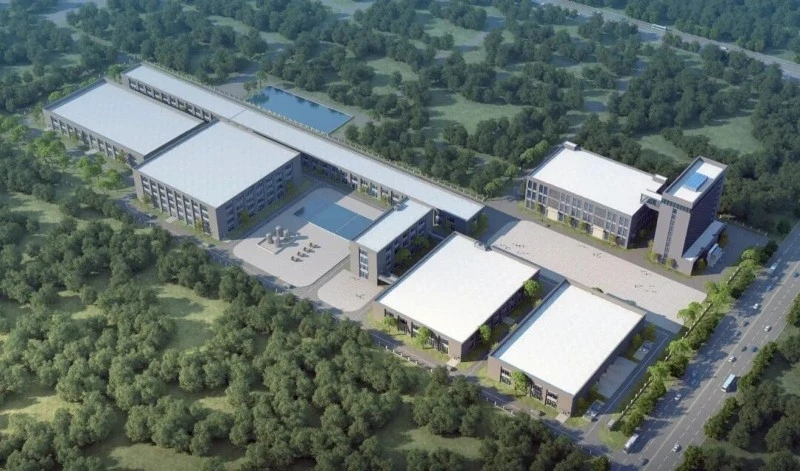
(Pharmaceutical Smart Park)
From Warehouse Automation to an Integrated Pharmaceutical Logistics System
Warehousing, transportation and distribution are fundamental capabilities of a smart pharmaceutical park.
An automated warehouse can combine Automated Storage and Retrieval Systems (AS/RS), stacker cranes, conveyors, AGVs or AMRs and warehouse management software to improve storage density and material handling efficiency.
A typical automated pharmaceutical logistics workflow can include:
Inbound Receiving → Inspection → Automated Storage → Inventory Management → Picking → Sorting → Transportation → Distribution
WMS can manage inventory, orders, storage locations and operational tasks, while WCS coordinates automated equipment and material-handling processes.
Through system integration, warehouse operations can be connected with ERP, manufacturing systems, transportation management platforms and other enterprise applications.
This allows information to flow across the supply chain rather than remaining isolated within individual departments or facilities.
Pharmaceutical Traceability and Digital Supply Chain
Traceability is particularly important for pharmaceutical logistics.
IoT sensors and identification technologies can collect information related to products, batches, locations and transportation conditions. RFID, barcode systems and other identification technologies can help establish digital records throughout the logistics process.
For temperature-sensitive pharmaceutical products, connected sensors can also monitor environmental conditions during storage and transportation.
A digital supply chain platform can integrate these data sources to improve visibility across:
Product batches
Inventory locations
Storage conditions
Transportation status
Order information
Distribution activities
Quality records
This creates a more transparent pharmaceutical logistics environment and provides a stronger foundation for supply chain coordination.
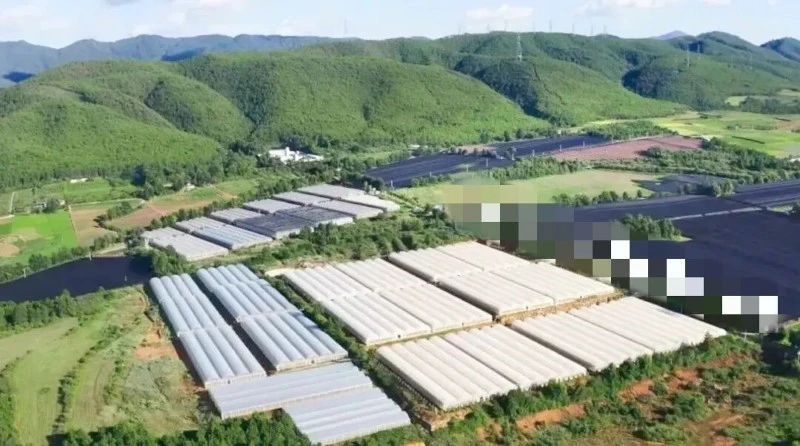
(Pharmaceutical Park Automation)
Smart Pharmaceutical Warehouses
Different pharmaceutical products have different storage and handling requirements. A smart pharmaceutical warehouse therefore needs to balance automation with business characteristics.
Depending on operational requirements, a pharmaceutical park may deploy:
Pallet AS/RS
Box and tote storage systems
Stacker cranes
Conveyor systems
AGV/AMR transportation
Automated sorting equipment
Intelligent picking systems
RFID and barcode identification
Temperature and humidity monitoring
WMS/WCS platforms
Automated equipment can reduce repetitive manual handling while software systems coordinate inventory, orders and equipment execution.
For large pharmaceutical distribution centers, automated storage and material handling can also help improve space utilization and provide more consistent warehouse operations.
Smart Origin Warehouses for Traditional Chinese Medicine
The development of traditional Chinese medicine creates additional opportunities for smart pharmaceutical logistics.
Raw materials such as medicinal herbs often involve complex information related to species, origin, production volume, quality inspection and processing.
Smart origin warehouses can centralize storage, processing, inspection and distribution while collecting data from different stages of the supply chain.
A digital platform can connect information about:
Cultivation → Origin → Processing → Inspection → Storage → Distribution → Market
This provides pharmaceutical companies with greater visibility into raw-material supply while helping improve inventory management and traceability.
For pharmaceutical industrial clusters, origin warehouses can also become shared logistics infrastructure serving multiple companies and supporting regional supply chain development.
Pharmaceutical Industrial Parks as Supply Chain Hubs
A mature pharmaceutical smart park should not function simply as a collection of independent companies.
Instead, it can become a supply chain hub integrating logistics, processing, testing, finance, data services and other industrial resources.
From a logistics perspective, this means creating shared infrastructure that supports multiple enterprises.
A centralized smart logistics platform can help coordinate:
Shared inventory
Warehouse capacity
Order information
Transportation resources
Distribution routes
Material processing
Quality inspection
Traceability data
This model can improve resource utilization and reduce duplicated infrastructure investment across individual companies.
For system integrators, the challenge is therefore shifting from building a single automated warehouse toward designing an integrated logistics network that can support multiple users and operational scenarios.
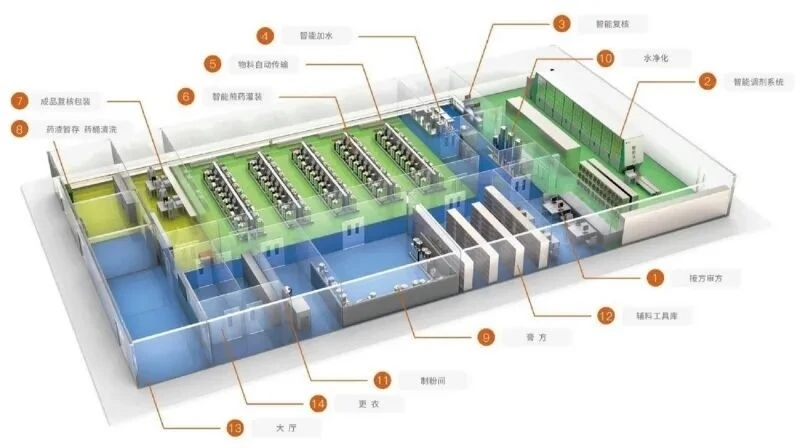
(China Manufacturing Automation)
Digital Twin and Intelligent Pharmaceutical Park Management
Digital twin technology provides another important foundation for smart pharmaceutical parks.
By creating virtual models of warehouses, production areas, transportation routes and other physical infrastructure, operators can visualize the status of the park in a digital environment.
When connected with IoT devices and business systems, the digital twin can provide information about:
Warehouse inventory
Equipment operating conditions
Material movement
Transportation activities
Energy consumption
Production and logistics tasks
Facility utilization
Combined with data analytics and intelligent scheduling, digital twins can support operational optimization and help identify potential bottlenecks before they affect daily operations.
China JSSL Company can integrate digital twin concepts with warehouse automation, WMS/WCS and intelligent logistics systems to create a more transparent operating environment for pharmaceutical facilities.
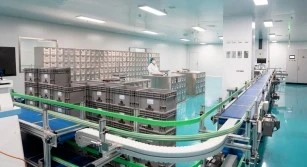
(Pharmaceutical AS/RS)
Key Challenges in Smart Pharmaceutical Park Development
Despite the potential of smart pharmaceutical parks, implementation involves several challenges.
High Initial Investment
Automated warehouses, transportation systems, software platforms and infrastructure upgrades require substantial initial investment. Long-term operation also requires equipment maintenance, software upgrades and skilled technical personnel.
Therefore, automation planning should be based on actual business volume and future development rather than simply pursuing the highest possible level of automation.
Complex System Integration
A smart pharmaceutical park may involve multiple equipment manufacturers and software platforms. Differences in data structures, communication protocols and system architectures can create integration challenges.
A unified data architecture and standardized interfaces are therefore essential for connecting WMS, WCS, ERP, transportation systems and IoT platforms.
Lack of Cross-Disciplinary Expertise
Smart pharmaceutical logistics requires knowledge of both pharmaceutical operations and automation technology. Professionals need to understand warehouse processes, compliance requirements, logistics management and digital systems.
System integrators therefore play an important role in connecting pharmaceutical business requirements with automation engineering.
Insufficient Standardization
Different pharmaceutical parks may adopt different equipment specifications, data structures and operational procedures. Greater standardization can improve interoperability and facilitate cooperation between enterprises and logistics platforms.
Poor Alignment Between Technology and Demand
Automation should solve real operational problems. Excessive investment in equipment without sufficient order volume or operational demand may result in underutilized assets.
A successful smart pharmaceutical park should therefore begin with business-process analysis and logistics planning before determining the appropriate automation architecture.
Future Trends in Pharmaceutical Smart Logistics
The development of pharmaceutical smart parks is expected to move toward deeper industrial collaboration and more intelligent technology applications.
1. Greater Supply Chain Collaboration
Smart parks will increasingly connect pharmaceutical R&D, manufacturing, warehousing, distribution and downstream healthcare services to create more integrated industrial ecosystems.
2. More Intelligent Logistics Automation
IoT, robotics, AGVs, automated warehouses and intelligent scheduling will increasingly be used to improve material flow and operational efficiency.
3. Deeper Digital Twin Applications
Digital twins will evolve from visualization tools toward simulation, prediction and operational optimization, providing decision support for warehouse planning and pharmaceutical logistics.
4. Stronger Traceability
RFID, IoT and other identification technologies will continue to improve product traceability across production, storage and distribution.
5. Specialized Industrial Services
Different pharmaceutical clusters may develop specialized services based on local strengths, including traditional Chinese medicine processing, medical device R&D, testing, certification, financial services and shared logistics infrastructure.
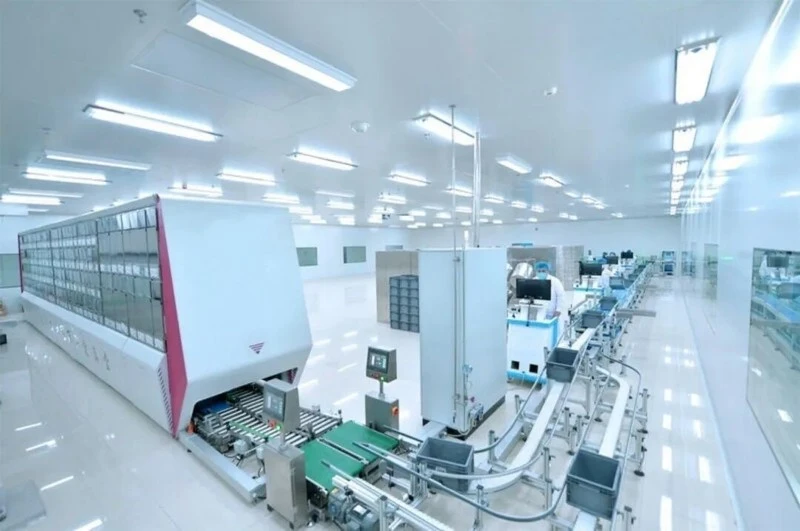
(Logistics Automation Equipment)
Building the Next Generation of Pharmaceutical Logistics
The future pharmaceutical smart park will combine industrial services, automated logistics, digital supply chain management and intelligent decision-making.
For China JSSL Company, the opportunity lies in integrating automation equipment and digital systems into a complete logistics infrastructure rather than providing isolated equipment.
A comprehensive solution can connect:
Automated Warehouse + AGV/AMR + Conveyor + WMS + WCS + RFID + IoT + Digital Twin + Supply Chain Integration
Through this integrated approach, pharmaceutical parks can improve warehouse utilization, material handling efficiency, inventory visibility and supply chain coordination while creating a scalable foundation for future digital transformation.
As China's pharmaceutical industry moves from scale-oriented growth toward higher-quality and more specialized development, smart logistics infrastructure will become an increasingly important part of pharmaceutical industrial parks. The combination of China Manufacturing, warehouse automation and logistics system integration can help pharmaceutical companies and industrial clusters build more efficient, transparent and intelligent supply chains.