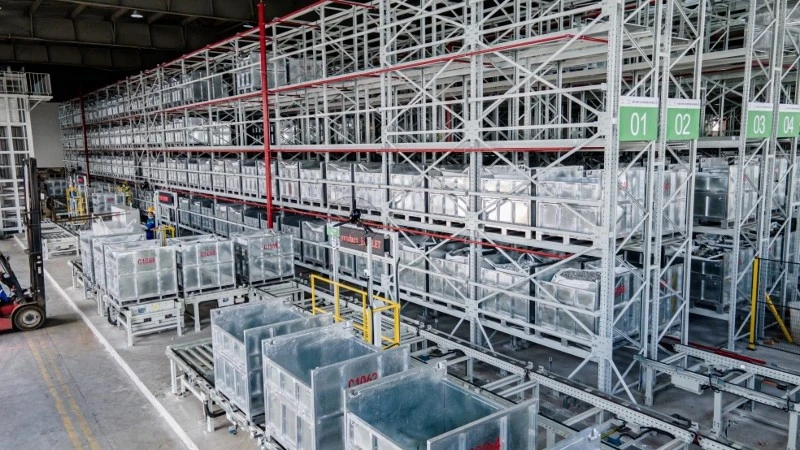
Driving the Digital and Green Transformation of E-Waste Recycling
As environmental regulations, circular economy initiatives, and carbon reduction targets continue to reshape industrial development, the waste electrical and electronic equipment (WEEE) recycling industry is moving toward more standardized, intelligent, and sustainable operations.
Traditional recycling and dismantling facilities often rely heavily on manual handling, forklift transportation, temporary storage, and experience-based material management. The diversity of discarded appliances, irregular material dimensions, heavy loading requirements, and complicated dismantling processes create significant challenges for internal logistics operations.
Low warehouse space utilization, inefficient material circulation, limited inventory visibility, insufficient traceability, and labor-intensive transportation can restrict processing capacity and operational efficiency.
To address these challenges, intelligent logistics systems are becoming an important foundation for modern e-waste recycling facilities. By integrating automated storage, heavy-duty AGVs, customized conveyors, intelligent warehouse management software, and digital traceability systems, recycling plants can establish more connected and efficient material flow operations.
China JSSL Company provides intelligent warehouse and logistics system integration solutions, supporting industrial businesses in planning and implementing automation systems for complex material handling, warehouse management, and production logistics applications.
Industry Challenges in E-Waste Recycling Logistics
Unlike conventional manufacturing logistics, e-waste recycling facilities handle a wide range of discarded appliances and dismantled materials with different sizes, weights, shapes, and storage requirements. These characteristics create several practical challenges for warehouse and transportation operations.
1. Inefficient Warehouse Management and Space Utilization
Discarded refrigerators, washing machines, televisions, air conditioners, computers, and other electrical appliances often arrive in irregular batches and varying conditions.
Traditional storage methods frequently rely on manual stacking, temporary storage areas, and forklift operations. Without standardized warehouse zoning, storage location management, digital inventory records, and automated task allocation, materials may be stored inefficiently and become difficult to locate.
Poor inventory visibility can also increase searching time, complicate material allocation, and create unnecessary storage congestion. These problems can affect the continuous supply of materials to dismantling lines and limit the overall processing capacity of recycling facilities.
Automated storage and retrieval systems provide an alternative approach by organizing material storage through digitally managed locations, automated handling equipment, and structured inventory management.
2. Heavy-Duty Transportation and Workplace Safety
Internal transportation in e-waste recycling facilities often involves heavy material cages, irregular containers, and large volumes of recyclable materials.
Traditional forklift transportation may create operational risks when pedestrians, forklifts, material cages, and other equipment share the same working areas. Blind spots, intersecting traffic routes, inconsistent operating practices, and limited real-time monitoring can increase the risk of collisions and material handling accidents.
Heavy-duty AGV systems, intelligent transportation scheduling, route planning, and safety management technologies can help improve transportation consistency and reduce unnecessary manual handling.
However, automated equipment must be carefully designed according to actual material loads, container dimensions, facility layouts, and traffic conditions. Safety integration, equipment reliability, and flexible transportation planning are essential for successful implementation.
3. Labor Shortages and Repetitive Manual Operations
Material unloading, cage handling, warehouse transportation, inventory movement, and finished-product handling often require substantial manual labor.
These operations can be physically demanding, repetitive, and difficult to maintain consistently, particularly in facilities with high material throughput and multiple dismantling lines.
Automation can gradually replace repetitive transportation and handling tasks, allowing workers to focus on inspection, sorting, quality control, equipment supervision, and exception handling.
A practical recycling automation strategy should prioritize high-risk and high-load operations while maintaining human involvement in sorting and inspection processes where flexibility and judgment remain important.
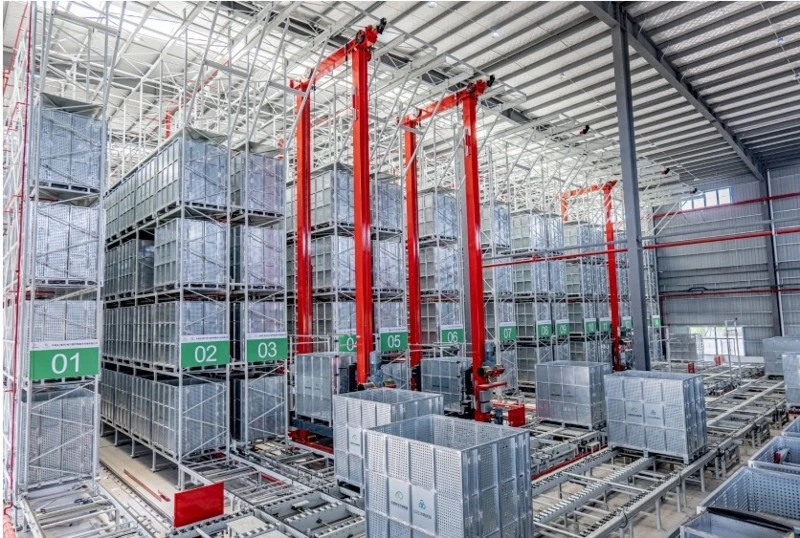
(WEEE Recycling Logistics System)
Building an Integrated Logistics System for Recycling Facilities
An intelligent e-waste recycling logistics system should connect the entire material circulation process, from incoming materials and warehouse storage to production supply, finished-product storage, and outbound transportation.
Instead of automating individual operations in isolation, an integrated logistics system coordinates different equipment and software components to create a continuous and traceable material flow.
A typical automated recycling logistics process may include:
Empty material cage supply to unloading and sorting stations.
Incoming appliance unloading, inspection, and sorting.
Material cage loading and identification.
Automated warehouse storage and inventory management.
Automated retrieval according to dismantling production requirements.
AGV transportation and conveyor-based material distribution.
Finished material collection and automated warehouse storage.
Order-based retrieval and outbound loading.
Empty cage return and recycling.
This integrated workflow can reduce unnecessary transportation, improve warehouse organization, and support more reliable material supply to dismantling operations.
China JSSL Company can support industrial logistics planning and system integration for suitable recycling applications, combining automated storage, transportation equipment, warehouse software, and customized handling solutions according to project requirements.
Customized Automation Equipment for Non-Standard and Heavy Materials
One of the major challenges in e-waste recycling automation is the diversity of materials and containers handled throughout the process.
Different appliance categories, dismantled components, material cages, and finished-product containers may require different transportation methods, loading interfaces, and storage configurations.
Customized Conveyor Systems
Customized conveyor systems can be designed to accommodate different material cages, load capacities, container dimensions, and transportation requirements.
Depending on the application, integrated conveyor solutions may include:
Roller conveyors for compatible material containers.
Chain conveyors for heavy-duty transportation.
Belt conveyors for specific material handling applications.
90-degree transfer mechanisms.
Elevating and lowering equipment.
Conveyor buffer stations.
Automated transfer interfaces between warehouse and production areas.
Conveyor systems can also incorporate dimensional inspection, barcode identification, weighing equipment, and material verification functions to support warehouse entry and transportation control.
For oversized or incompatible materials, automated inspection and exception handling mechanisms can direct materials to designated manual processing stations, reducing the risk of damage to automated warehouse equipment.
Heavy-Duty AGV and RGV Systems
Heavy-duty AGVs are increasingly used in recycling facilities for transportation of material cages, recyclable components, and dismantled products.
Depending on load requirements and facility conditions, mobile robots may be equipped with lifting, under-ride, or other customized transportation mechanisms.
AGV systems can support:
Heavy material cage transportation.
Warehouse-to-production material delivery.
Finished-product transfer.
Cross-zone transportation.
Automated transportation between conveyor interfaces.
Production line replenishment.
Empty container circulation.
Rail-guided vehicles (RGVs) can also be integrated into warehouse or conveyor transportation systems where fixed routes and high-frequency transfers are required.
For recycling facilities, equipment selection should consider actual load capacity, cage dimensions, transportation routes, operating frequency, floor conditions, traffic management, and safety requirements.
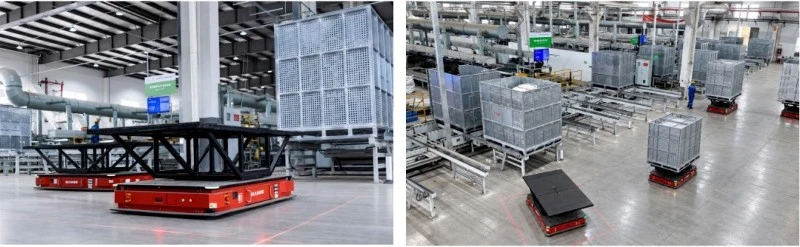
(Automated Material Cage Handling)
Automated Storage and Retrieval Systems
Automated warehouses can help recycling facilities improve storage organization, inventory visibility, and vertical space utilization.
Automated storage and retrieval systems may incorporate stacker cranes, storage racks, conveyor interfaces, barcode or RFID identification, and warehouse management software.
Separate storage strategies can be established for incoming materials, dismantling outputs, different material categories, and finished products, depending on operational requirements.
Digital warehouse management can support location allocation, inventory tracking, retrieval scheduling, material identification, and warehouse task coordination.
For recycling applications involving full and partial material cages, storage strategies can also be customized to accommodate different container conditions and inventory circulation requirements.
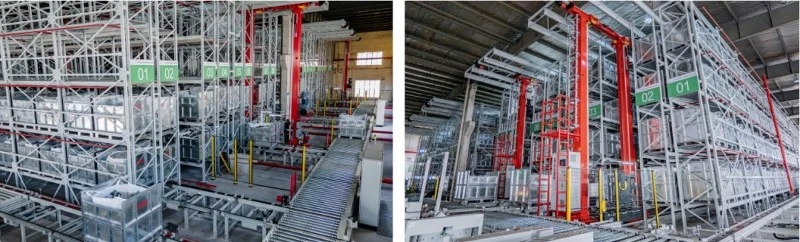
(Intelligent Warehouse Management System)
Intelligent Software Integration and Full-Process Traceability
Digital management is an essential component of intelligent recycling logistics. By integrating equipment control, warehouse management, enterprise management systems, and environmental reporting platforms, recycling facilities can establish a more transparent and traceable material flow.
Warehouse Management System (WMS)
The WMS manages warehouse operations and inventory information, including:
Material identification and classification.
Barcode or QR code management.
Warehouse location allocation.
Inventory records and status management.
Inbound and outbound task generation.
Material cage tracking.
Production supply coordination.
Inventory data synchronization.
By maintaining structured warehouse records, the WMS helps improve inventory visibility and supports more accurate material management.
Warehouse Control System (WCS)
The WCS coordinates the execution of warehouse and transportation tasks by controlling and monitoring connected equipment.
Depending on system configuration, the WCS can coordinate:
Stacker cranes.
AGVs and AMRs.
RGVs.
Conveyors.
Elevators and transfer equipment.
Barcode scanning stations.
Weighing equipment.
Automated inspection stations.
The WCS communicates with equipment controllers, receives operational feedback, and manages task execution according to system rules and scheduling priorities.
ERP and Environmental Data Integration
Integration between warehouse management systems and enterprise resource planning (ERP) platforms can support the synchronization of material records, dismantling production information, inventory data, and outbound transactions.
Where required, recycling facilities may also integrate logistics data with environmental monitoring or regulatory reporting platforms.
Material category, weight, processing records, storage information, and transaction timestamps can be collected through digital workflows, helping reduce dependence on manual records and supporting data consistency.
The actual reporting requirements and regulatory interfaces should be determined according to the applicable environmental regulations and facility-specific compliance requirements.
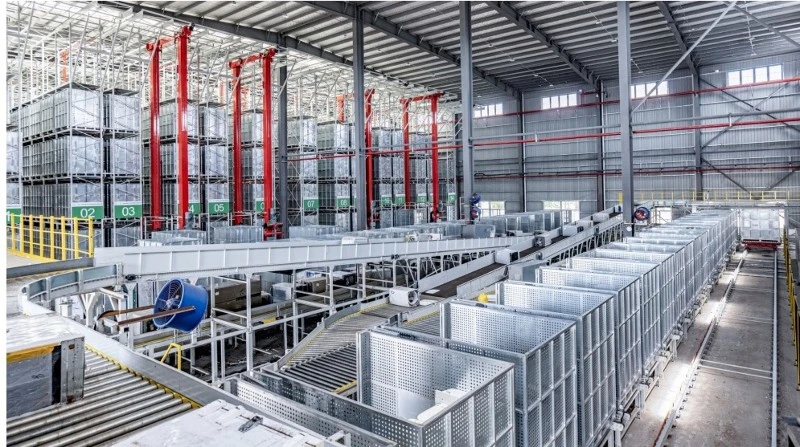
(Intelligent Material Transportation)
Human-Machine Collaboration and Practical Automation Planning
Intelligent recycling facilities do not necessarily require complete unmanned operations.
Some inspection, sorting, and classification processes involve irregular materials, complex conditions, or decisions that may be difficult to standardize. In these scenarios, human-machine collaboration can provide a practical balance between automation and operational flexibility.
Automated equipment can handle heavy transportation, repetitive movement, warehouse retrieval, and standardized material distribution, while personnel remain responsible for inspection, sorting, quality control, exception handling, and equipment supervision.
Automation planning should also consider the existing facility layout, floor conditions, available space, material flow, processing capacity, and investment requirements.
For existing recycling facilities, phased implementation may be more practical than a complete reconstruction. Initial automation can focus on high-load transportation, warehouse management, or production supply, with additional equipment and software capabilities introduced as operational requirements develop.
This approach allows businesses to balance automation investment, operational improvement, system flexibility, and long-term scalability.
Advancing Intelligent and Sustainable Recycling Logistics
The development of intelligent logistics systems is creating new opportunities for the e-waste recycling industry to improve material circulation, warehouse efficiency, operational safety, digital traceability, and resource utilization.
Through the integration of automated warehouses, heavy-duty AGVs, customized conveyor systems, warehouse management software, and digital information platforms, recycling facilities can gradually move from fragmented manual operations toward more connected and standardized logistics processes.
China JSSL Company focuses on intelligent warehouse automation and industrial logistics system integration, supporting businesses in evaluating material handling requirements and developing practical automation solutions for complex industrial environments.
As circular economy initiatives and environmental management requirements continue to evolve, intelligent logistics will play an increasingly important role in the modernization of e-waste recycling facilities, helping the industry develop toward more efficient, transparent, and sustainable operations.