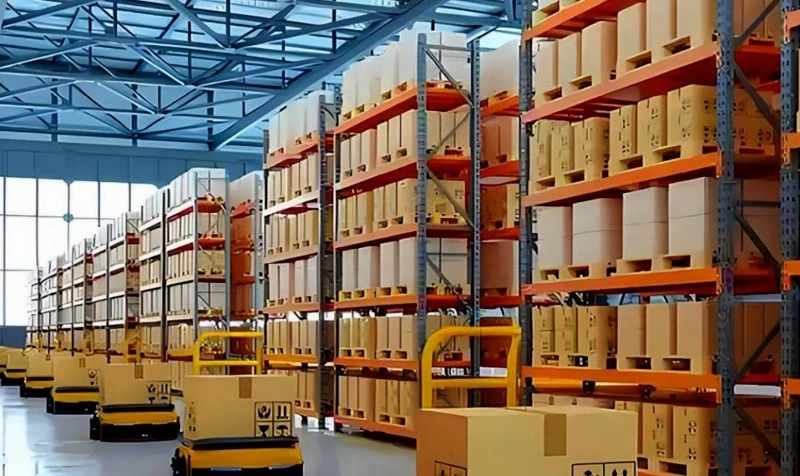
From Traditional Machinery Production to Intelligent Manufacturing Ecosystems
The equipment manufacturing industry is undergoing a major transformation, shifting from production scale expansion toward greater efficiency, flexibility, quality, and digital integration. As manufacturing technologies continue to evolve, intelligent factories and smart logistics systems are becoming essential components of modern industrial development.
Equipment manufacturing plays a fundamental role in supporting industrial production, infrastructure development, transportation, energy, and other major economic sectors. Its products range from machine tools, industrial robots, hydraulic and pneumatic components to complex machinery, electrical equipment, and complete industrial systems. The development of this sector directly influences the technological capabilities and competitiveness of the broader manufacturing industry.
Over the past century, China's equipment manufacturing industry has experienced several stages of development, from its early industrial foundations and technology introduction to large-scale manufacturing growth and advanced technological innovation. Today, Chinese manufacturers are increasingly focusing on automation, digitalization, flexible production, and intelligent industrial systems.
As manufacturing operations become more complex, intelligent factories and smart logistics are emerging as two interconnected foundations of industrial transformation. Intelligent manufacturing systems improve production planning, process management, equipment coordination, and quality control, while smart logistics connects material storage, transportation, production supply, assembly, and finished-product handling.
For equipment manufacturers, integrating production processes with intelligent logistics is increasingly important for achieving sustainable operational improvements.
Industry Transformation: Flexible Production and Reduced Manual Workloads
The equipment manufacturing industry is characterized by complex production processes, diverse component specifications, and significant differences between manufacturing segments. Production typically involves machining, component processing, assembly, testing, inspection, and final delivery, requiring precise coordination of materials, equipment, and production schedules.
The growing demand for customized machinery and diversified products is also changing traditional manufacturing models. Instead of relying exclusively on standardized production and large batches, manufacturers are increasingly adopting multi-product, small-batch production, flexible manufacturing, and customized assembly processes.
This shift creates new requirements for internal logistics systems. Material delivery schedules must increasingly respond to changing production orders, frequent line adjustments, and real-time manufacturing priorities. Logistics operations that previously followed fixed daily delivery routines may now need to support hourly scheduling and order-specific material replenishment.
At the same time, manufacturers are seeking to reduce repetitive and physically demanding tasks. Automated material handling equipment, AGVs, AMRs, robotic arms, and intelligent storage systems can take on heavy lifting, repetitive transportation, and routine material distribution tasks, allowing operators to focus on assembly, quality inspection, process control, and exception handling.
The objective is not simply to replace manual labor, but to create more efficient human-machine collaboration while improving workplace safety, operational accuracy, and production continuity.
Smart Logistics: Connecting Manufacturing Processes and Material Flow
As equipment manufacturing becomes more flexible, traditional logistics systems based on fixed conveyors, manual forklifts, and predetermined material routes may struggle to respond efficiently to changing production requirements.
Smart logistics solutions provide manufacturers with more adaptable material handling capabilities through automated storage systems, AGV and AMR fleets, conveyor systems, robotic handling equipment, warehouse management software, and intelligent scheduling platforms.
AGV and AMR systems are increasingly used for flexible material delivery because they can be deployed across different production areas, adjusted to changing layouts, and integrated with manufacturing processes. Depending on the application, mobile robots can transport components, replenish production stations, transfer materials between machining and assembly areas, and support finished-product movement.
Automated storage and retrieval systems (AS/RS) can improve storage density, inventory control, and material availability. Goods-to-person picking systems can also support component preparation and assembly kitting, helping deliver the correct parts to production stations at the right time.
For equipment manufacturing, logistics automation may involve a combination of technologies rather than a single equipment solution. A complete system can integrate warehouse storage, production material replenishment, intermediate buffering, picking, assembly supply, and finished-product handling.
China JSSL Company provides intelligent logistics system integration solutions for industrial applications, supporting manufacturers in evaluating logistics processes, selecting suitable automation technologies, and integrating warehouse and material handling systems with production operations.
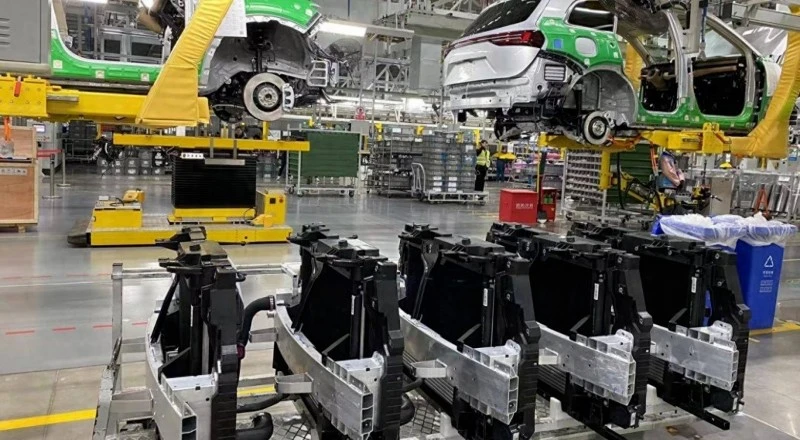
(Equipment Manufacturing Automation)
Challenges in Intelligent Factory Implementation
Despite the growing adoption of intelligent manufacturing technologies, many equipment manufacturers still face practical challenges when implementing smart factories and logistics automation.
Existing Factory Space and Infrastructure Constraints
Older manufacturing facilities may not have been designed for automated warehouses, robot transportation routes, or integrated logistics systems. Limited floor space, structural restrictions, existing production equipment, and insufficient infrastructure can make automation projects difficult to implement.
In such environments, solutions must be developed according to the actual factory layout and production requirements. Compact automated storage systems, flexible mobile robots, modular conveyors, and phased implementation strategies may provide practical alternatives to extensive structural reconstruction.
Investment and Return on Investment
Manufacturers increasingly evaluate automation projects based on operational benefits, implementation costs, and expected investment recovery periods. Instead of pursuing complete automation regardless of cost, many companies prefer solutions that address the most critical operational bottlenecks and deliver measurable improvements.
A phased automation strategy can help businesses begin with high-impact applications, such as warehouse inventory management, production material replenishment, or repetitive transportation tasks, before gradually expanding into more integrated systems.
Integration Between Logistics and Manufacturing Processes
The coordination of logistics equipment with production processes remains one of the most important challenges in intelligent factory construction.
Material transfer between machining equipment, assembly stations, testing areas, and warehouses requires careful planning of loading and unloading interfaces, buffer storage, transportation routes, delivery priorities, and production schedules.
Equipment manufacturers often handle components of different dimensions, weights, and structural characteristics. Consequently, transportation, storage, picking, and handling solutions may require customized equipment configurations and application-specific integration.
Even when manufacturing the same product, changes in product models or production processes can affect the logistics system. Intelligent logistics solutions therefore need sufficient flexibility to accommodate future adjustments.
Practical Automation Technologies for Equipment Manufacturing
Several established automation technologies are becoming increasingly important in equipment manufacturing logistics.
AGV and AMR systems: Flexible transportation of components, production materials, tooling, and finished products.
Automated storage and retrieval systems: High-density storage, inventory management, and automated material access.
Goods-to-person picking systems: Component picking, assembly kitting, and order-based material preparation.
Robotic handling systems: Automated loading, unloading, sorting, and material handling for specific production processes.
Conveyor and transfer systems: Continuous material movement between production areas, warehouses, and assembly stations.
Intelligent warehouse management systems: Digital inventory tracking, storage allocation, material flow management, and operational visibility.
The selection of these technologies should be based on actual production processes, material characteristics, facility conditions, and operational objectives. Reliability, compatibility, flexibility, and maintenance requirements should remain key considerations throughout system planning.
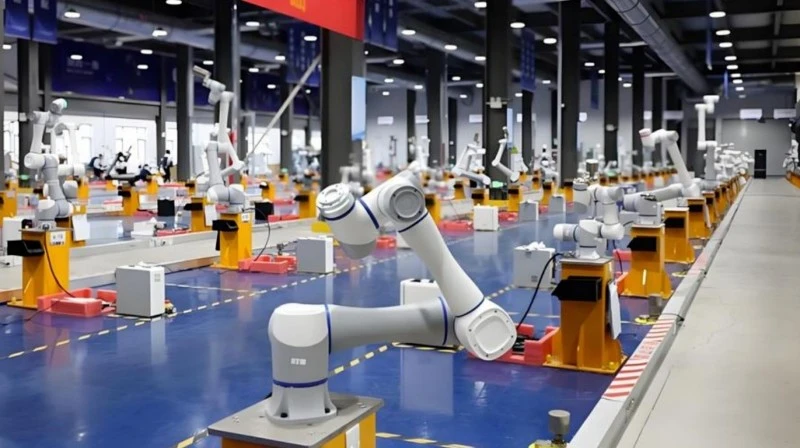
(Digital Manufacturing Logistics)
Digital Integration and the Future of Smart Logistics
The development of intelligent manufacturing is increasingly driven by the integration of logistics equipment, production systems, digital platforms, and intelligent scheduling technologies.
Warehouse Management Systems (WMS), Warehouse Control Systems (WCS), Manufacturing Execution Systems (MES), fleet management platforms, and other industrial software can support coordinated operations across storage, transportation, production supply, and inventory management.
Data integration enables manufacturers to improve material visibility, optimize transportation routes, coordinate delivery priorities, and reduce unnecessary handling and waiting time. Digital simulation and virtual planning can also help evaluate system configurations, identify potential bottlenecks, and improve project planning before physical implementation.
Emerging technologies such as artificial intelligence, industrial big data, digital twins, and intelligent scheduling algorithms are expected to further improve logistics coordination and operational responsiveness.
Digital product traceability and standardized data exchange may also become increasingly important in manufacturing supply chains, supporting more transparent product lifecycle management and improved coordination between suppliers, manufacturers, and downstream customers.
From Individual Automation Projects to Integrated Manufacturing Solutions
The future of equipment manufacturing automation lies not only in individual machines or isolated production processes, but in the coordinated development of manufacturing operations and internal logistics systems.
For manufacturers, successful transformation requires a practical understanding of production processes, material flow, factory infrastructure, investment priorities, and long-term operational requirements. Automation projects should be developed according to specific industrial scenarios, with system flexibility and scalability considered from the beginning.
China JSSL Company supports intelligent warehouse and industrial logistics system integration, helping manufacturing businesses evaluate automation opportunities and develop solutions involving automated storage, mobile robots, material handling equipment, transportation systems, and warehouse software integration.
As manufacturing industries continue to move toward flexible production, digital integration, and intelligent operations, smart logistics will play an increasingly important role in improving production continuity, resource utilization, and manufacturing competitiveness.
The integration of intelligent factories and smart logistics represents an important direction for the future of equipment manufacturing, providing a foundation for more adaptable, efficient, and connected industrial production systems.